-
What is carbon dioxide? Does carbon dioxide explode?
Carbon dioxide (CO2) is a non-flammable, non-explosive, naturally occurring gas. Humans exhale it with every breath; it is used in hundreds of products including soda, dry ice and fire extinguishers; and is a necessary component of plant growth. It’s the bubbles in your soda or beer.
-
How is carbon dioxide transported and stored?
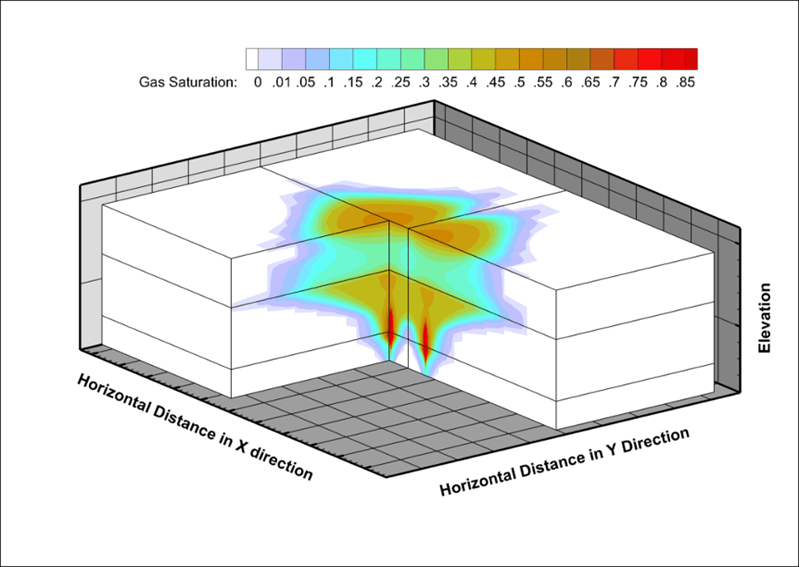
For the purposes of a carbon capture and storage (CCS) project, CO₂, once captured, is compressed to turn it from a gas into a state called a supercritical (or dense) fluid. This allows the CO₂ to be handled like a fluid for more eicient transport, typically via pipeline, and it occupies less space in the subsurface when injected for storage.
-
What happens if carbon dioxide leaks?
In the unlikely occurrence that CO2 escapes from a pipeline or through a wellbore to the surface, most of the CO2 quickly evaporates into the air (reverting to its original gaseous state), although it is common to see dry ice (solid CO2) around the site as well. The gas typically requires little to no clean-up.
In the event of a leak, pipeline and injection well systems are designed to automatically shut down, ceasing all operations until the cause is determined and repaired. Operation does not resume until any issues are fixed and the regulator has approved CO2 injection can restart.
-
Why do we call it carbon capture, CCS, or CCUS?
Carbon capture is the act of separating CO2 molecules from the exhaust or flue gas of an industrial facility such as a power plant or ethanol plant; this is known as point source capture (PSC). Carbon capture technology has been used for decades, particularly on natural gas processing systems at oil and gas fields.
Carbon capture can also remove CO2 directly from the atmosphere, which is known as Direct Air Capture (DAC). DAC is a more recent development and is not a widely deployed approach currently.
In Carbon Capture and Storage (CCS), captured CO2 is injected deep underground (nearly 2/3rds of a mile or more) into porous and permeable rock layer(s), covered by an impermeable cap rock that keeps the CO2 contained within the storage rock layers.
In carbon capture, use, and storage (CCUS), the captured CO2 is used for beneficial purposes. The most common use for CO2 in terms of volume is for enhanced oil recovery (EOR) where CO2 is injected into a mature oil reservoir to mobilize and produce more oil that has been left behind after initial production. Nearly all that CO2 (>95%) ultimately ends up being trapped in the subsurface at the conclusion of the EOR activity. Other uses for CO2 include medical purposes, carbonating beverages, and enhancing crop growth in a greenhouse.
-
Are there successful CCS/CCUS projects in Alaska or elsewhere?
Yes, in Alaska CCUS has, via enhanced oil recovery (EOR), been occurring in oil fields on the North Slope since the 1980s. These efforts have increased oil recovery by over 500 million barrels of oil. Elsewhere in North America, about 2.5 million tonnes per year is being captured in North Dakota and shipped to Canada for EOR and/or storage since 2000. North Dakota also has 3 other projects that are injecting and storing CO2, including at two ethanol facilities and at Dakota Gasification Company’s synfuels plant, with each beginning operation in the last 2-4 years. In Saskatchewan, the Boundary Dam power plant has captured CO2, for injection since 2014, while in Alberta, the Alberta Carbon Trunk Line has been transporting captured CO2, for EOR since 2020.
The Global CCS Institute’s 2025 Global Status of CCS reports that there are 77 active, commercial-scale CCS projects globally.
-
Why do companies/organizations pursue CCS projects? Why is it being considered in Alaska?
CCS may be pursued for an array of reasons, and each company or organization has their own reasons or goals. Some examples include: 1) a company may need to comply with regulations or meet CO2 emissions targets set by a government agency. 2) Energy companies may have financial incentives, such as low carbon fuel markets where CCS can lower their carbon intensity, thus leading to a higher valued product. 3) Company commitments, investors, or customer expectations may also drive a company to produce low-carbon products or low-carbon energy.
Regardless of the reason, many companies see the value in pursuing CCS for their industry, whether it is in power generation, oil and gas production, or other industrial processes.
Specific to southcentral Alaska, a shortage of natural gas is forcing the energy industry to consider other options to provide power to the region. Due to the state’s abundant coal supplies, the most affordable, reliable, and secure option for power generation is with a coal-fired power plant that is built with CCS technology.
In addition to the power/electricity industry, the oil & gas industry in Alaska needs to stay competitive in U.S. west coast markets. These markets are pushing oil producers to provide lower carbon intensity oil. To avoid Alaska companies from being forced out of the market, CO2-based enhanced oil recovery (EOR), or CCUS, is the most viable option to keep Alaskan oil competitive in these marketplaces.
-
What is the current federal policy on CCUS?
Updates made in the One Big Beautiful Bill passed on July 4, 2025, increased the 45Q credit paid to $85 per ton CO2 for enhanced oil recovery (same as for geologic sequestration) and indexes the 45Q tax credit dollar amount with inflation.
Current federal regulations require a new coal fired power plant in Alaska to capture 40% of the CO2 and to capture 70% to be eligible for the 45Q credit.
-
What CCUS-related projects are underway in Alaska?
Regulatory
The Alaska Oil and Gas Conservation Commission (AOGCC) is seeking Class VI injection well primacy from the Environmental Protection Agency (EPA) (SB48, May 2023). Class VI wells are designed specifically for injection and storage of carbon dioxide. Gaining primacy over this class of wells would allow AOGCC to directly regulate and oversee the permitting, development, and stewardship of these wells in Alaska, as it currently does with other oil and gas wells in Alaska. For more information, visit the AOGCC website.
The Alaska Department of Natural Resources (DNR) carbon storage regulations (HB50, July 2024) took effect February 2025. For more information, visit the DNR Division of Oil and Gas website.
Federal DOE Funded Awards
DNR has a $1M carbon storage public information sharing geologic database project underway. Public outreach partners include the University of Alaska Fairbanks Alaska Center for Energy and Power and Alaska Resource Education.
The University of Alaska Fairbanks Institute of Northern Engineering is leading an $11M Alaska Railbelt Carbon Capture and Sequestration (ARCCS) CarbonSAFE Phase II storage assessment with the Energy and Environmental Research Center and Advanced Resources International. ARCCS is evaluating CCS for a new -fired power plant and two existing natural gas power plants in Anchorage operated by Chugach Electric Association. For more information, visit the ARCCS project page.
Arctic Slope Regional Corporation Energy Services (AES), Santos, and Repsol are carrying out a $3M Direct Air Capture Pre-Feasibility Study ongoing with the U.S. Department of Energy.
AES and Santos were selected for award on a $62M CarbonSAFE Phase III project focusing on subsurface site characterization and permitting for a potential North Slope project site called North to the Future CCS Hub.
Additional Studies
The U.S. Department of Energy and the Japan Ministry of Economy, Trade and Industry announced a cross-border CCS import to Alaska feasibility study, with Phase I focused on transportation feasibility. Hilcorp, Sumitomo, and K Line signed joint study agreement for CCS feasibility of imports from Japan to Alaska for sequestration.
-
What industries use carbon capture?
Carbon dioxide capture is being applied in manufacturing plants for cement, iron, steel, chemicals, and ethanol, in natural gas processing, oil refining, and power and heat generation.
-
Does CO2 injection and storage work?
Yes, underground CO2 injection first began more than 50 years ago in western Texas. Most CO₂ injection has occurred as part of EOR operations. While the goal is different than a project that is only looking to store CO2, scientists and engineers have learned a great deal about CO2's behavior in the subsurface via different monitoring strategies and how to manage project infrastructure like pipelines and wellbores to be compatible with exposure to CO2.
In Alaska, since 1986, carbon capture technology has been used to process the entire produced gas stream in Prudhoe Bay. The Central Gas Facility separates carbon dioxide from the natural gas stream (12.5% CO2) and manufactures miscible injection gas (20% CO2) for enhanced oil recovery. The Prudhoe Miscible Gas Injection Project has increased field recovery by over 500 million barrels of oil.
Now, CCS projects that are injecting CO2 for storage purposes can benefit from the knowledge gained and technologies developed during EOR operations.
-
Is CCS/CCUS economically feasible? What is motivating companies to pursue CCS/CCUS?
Yes, it is feasible.
CO2 capture costs have been coming down in recent years as advances have been made in capture technology. For example, CO2 captured from a coal-fired power plant had been estimated in the $50-$60/tonne, but recent estimates suggest capture costs have dropped to ~$35/tonne. These savings are significant given large-scale projects are potentially injecting millions to tens of millions of tonnes of CO2 annually.
While capture costs have dropped, there are economic incentives that are driving the CCS/CCUS markets forward. U.S. IRS Section 45Q tax credits provide $85/tonne of CO2 stored for both CCS and enhanced oil recovery (EOR). Energy producers can benefit from low carbon fuel markets where lower carbon intensity products will sell into restrictive markets, and CCS is a key mechanism for companies to meet those restrictions. EOR benefits from the sale of produced oil on top of the 45Q tax credits.
Furthermore, market forces may motivate companies to invest in CCS. For example, Alaskan oil may be forced out of west coast markets as state’s require lower carbonintensity oils. Investors or customer bases may also demand and prefer low carbon products that can also drive companies to invest in CCS for their facilities.