Upper Yukon River (Canada) trip
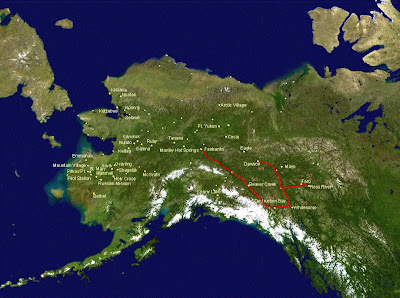
May 2 (Wednesday): drill Beaver Creek
May 3 (Thursday): talk Beaver Creek drive to Destruction Bay
May 4 (Friday): Destruction Bay; drive to Whitehorse
May 5 (Saturday): drill in Whitehorse
May 6 (Sunday): Drive to Dawson
May 7 (Monday): Drill Dawson
May 8 (Tuesday): Drill Faro
May 9 (Wednesday): drill Ross River
May 10 (Thursday): Drive back to UAF/Whitehorse
Beaver Creek (May 2, 2007)
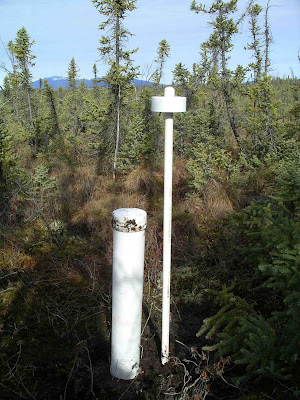
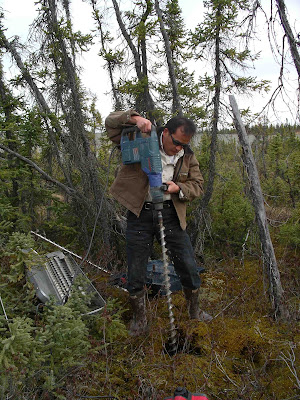
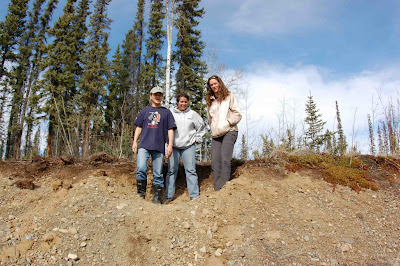
Kenji arrived at Beaver Creek in afternoon. This area is really interesting
about climatic conditions. One of the coldest spot of the North America is
just 20 mile from here. Permafrost is feeling much colder than Fairbanks even
lower latitude. At first, I meet Panya (Geological Survey of Yukon), we
discuss about drill site. Erin (principal) is very helpful for getting
permission. Kazu (White River First Nations) also many support for this
program to success. At the end up our discussion for drill site, Connie (White
River First Nations) helps for searching good spot for our drill site. At the
middle of excursion Kazu join to us to looking for the site. I deeply
appreciate so many people kind us and help us a lot!
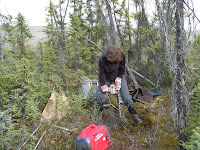
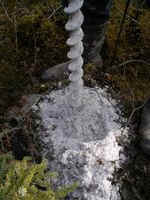
At the end of discussion, we drill 8km a way from town. This is a little bit
far from town but scientifically very ideal site to monitor permafrost. We hit
big massive ice layer between 3.5-4.2m. It must be buried ice wedges.
Destruction Bay (May 3, 2007)
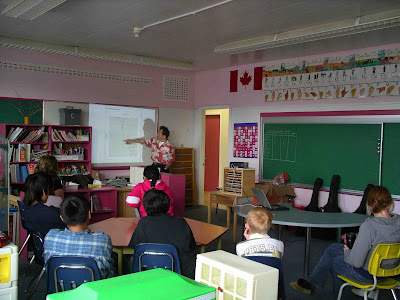
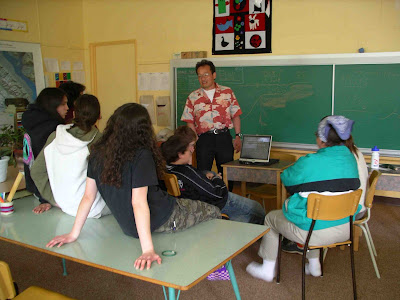
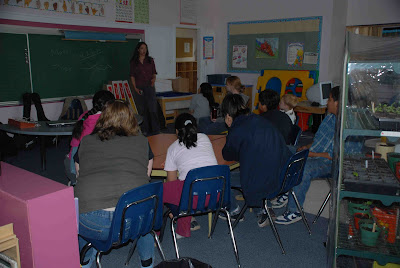
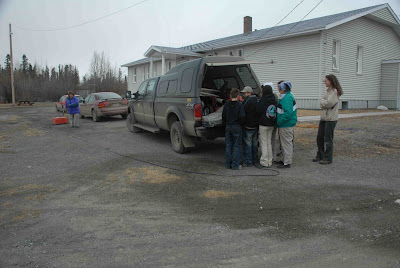
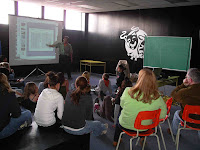
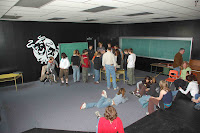
Panya (Yukon Geological Survey) and Kenji gave presentation first thing in the
morning at Beaver Creek School. Then we intall temperature sensors at borehole
site.
After the installtion, we move to Destruction Bay. Destruction Bay School is
very small and four students are studying there. We gave presentation and
demonstrate GPR (Ground Penetrating Radar).
Whitehorse (May 4, 2007)
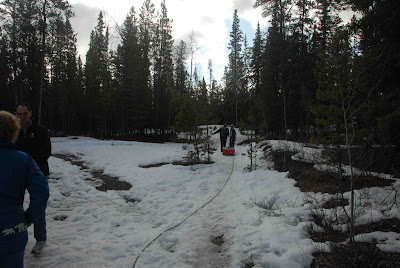
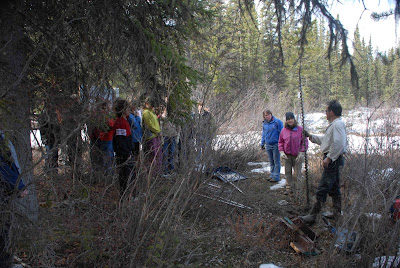
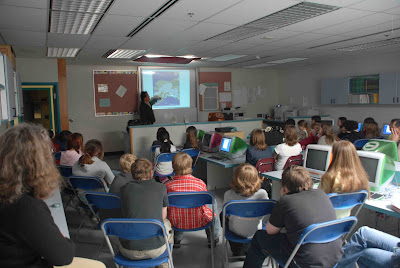
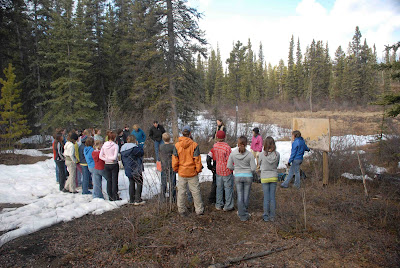
We are now in Whitehorse and have drilled several sites at Golden Horn school.
Unfortunately, we had no luck finding permafrost there. Whitehorse is located
near the southern boundary of permafrost, so it is difficult to find
permanently frozen ground here. Seasonally frozen ground in the upper 70 cm of
the ground is common, but so far we have had no luck finding permanently
frozen ground below the seasonal frost layer.
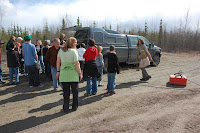
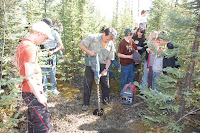
The school students visited the drill site to see the equipment we use for
drilling and geophysical investigations (GPR: Ground Penetrating Radar). After
the field demonstration, we went back to classroom to show a permafrost slide
show. The students were great and were very interested, and we had a great
time with the Golden Horn students and teachers. Unfortunately, we still
haven't found permafrost for them to monitor, but we are not giving up yet...!
We found permafrost! (May 5, 2007)
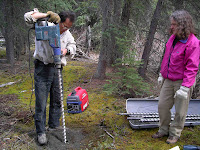
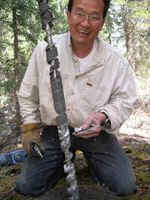
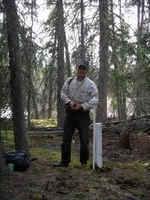
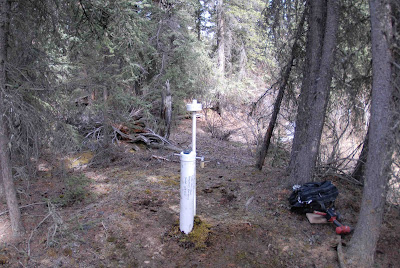
In the very discontinuous permafrost zone near Whitehorse, we finally found
permafrost near Golden Horn school! Karen McKenna (a local Whitehorse
permafrost/vegetation specialist) helped us greatly in finding a small patch
of permafrost near Cowley Creek! We drilled a 5 m borehole, and found a nice
30 cm thick massive ice layer at about 3 m depth. Thank you Karen!!
We do not know the complete thermal state of this permafrost site yet, but the
permafrost is estimated to be about 10 m thick.
Dawson City (May 6, 2007)
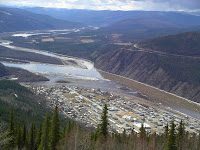
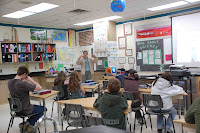
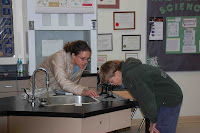
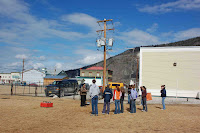
We drove to Dawson about 6 hours drive from Whitehorse. Dawson had gold rush
in 1898 since then the school was located same position, but the building was
rebuild several times. Current school building was build early 1980s. This is
one of the most beautiful building we saw. Panya brought many past reports for
Dawson city. We check existence of the several boreholes in the reports. These
are great materials for school students checking permafrost temperature
decadal changing. Most of the borehole/thermistors are disconnected by the
remodeling/ redesign. Very few boreholes are seems survive since 1970s. We
also plan to establish permafrost observation site in front of school.
We had presentation next day. After presentation, Panya demonstrate stereo
pair air photograph and datalogger. Then all students went out baseball field
to test ground peneteratating radar.
Drilling at Dawson (Sometimes we loose, but this is real life and real
excitement!)
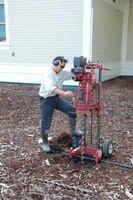
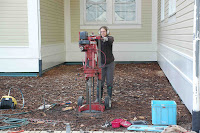
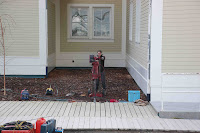
We start drill in front of school using minuteman drill system. The reason of
using this system is gravel layer. Mike told us detail school property ground
conditions since 1920s and Panya’s reports, we knew the drill site had
30-100cm of gravel layer, up to 3.5m of frozen silt and gravel deeper than
3.5m. The hand operated drill system cannot go through upper gravel layer.
Once we start Minuteman, we can break through frozen gravel layer and up to
2.5m works great! Then we got problem about water system. The way of break
frozen gravel layer need air compressor or pressured water to blow out cutting
chips. We use water system for this and drill bit filled dart at the water
discharge holes at 2.5m. We just keep drill at 3m deep and to install casing.
Upper gravel collapse in the hole and never let PVC pipe go through even half
inch PVC! We try auger or core barrel to cleaning gravel layer but all failed!
We will back here again with another (hydrolic) drill system!
Faro (May 8, 2007)
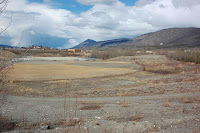
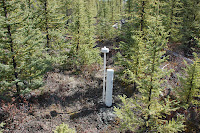
We drive another 500-600 km to go Faro today. Faro is originally mining town
and house and road is beautifully constructed. We talk to Garry (principal)
and Bruce (science teacher) about class schedule and drill site. School
building and play ground had quite bit permafrost problems. One of the
baseball field need fill in gravel every year that why grass could not
growing. When we arrived Faro, it was rain. But it looks getting better. We
decide to drill upper part of small valley next of the school. We are
successfully installed Faro permafrost monitoring site around 7pm. We back to
B&B to make temperature sensors and start datalogger. After the dinner,
sensors are in the hole and start recording. The sky is just getting orange
and beautiful sunset with some remaining cloud.
Ross River/ Faro (May 9, 2007)
It was last working day in Canada today. We had to drive a little bit more...
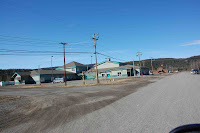
At first, we drove about 60km to Ross River in the morning. Ross River is
native community almost head water for Yukon River watershed. Village is
located on the permafrost but about 6m of thawed gravel layer making us to
confused the presence of permafrost. We saw big & tall white spruce with
dry forest floor sounding the village. This is typical sign of the absent of
the permafrost. However, school had been serious permafrost degradation
problems. This beautiful Ross River School builds 5 years ago, but already
many cracks in the building and still moving!
Brian (Science teacher) shows us quick tour in the building and we had a great
time with local students. EBA have a plan to drill at the school next month.
They agree to use this drill hole for our outreach program! So we do not plan
to drill here in Ross River today.
After the Ross River School GPR demonstration, we drove back to Faro. Many
stormy clouds developed around road. We were little worry about field
demonstration in Faro this afternoon. In the sky, also we saw abnormal number
of crane flying! What a interesting place here!
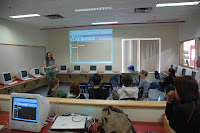
We made it just 30 minute before presentation for Faro school. This school had
also been permafrost problems. We had a fun time with extraordinary students.
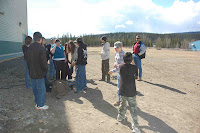
They were so good manner and knowledge about permafrost! After the talking, we
all went out to the drill site. We demonstrated GPR and drilling. Many
students were first time to touch permafrost. We believe they enjoy it. At the
end of field demonstration, we set datalogger and back to school. Then we
drove back to Whitehorse this evening with excellent feeling because of
meeting with outstanding Faro’s students and great success of this program.